
Truck crashes involving local delivery vans on highways can become a complex situation, especially when multiple companies are involved. The question of who is liable depends on many factors, including the actions of the drivers, the companies they work for, and even third parties who may be responsible for maintenance or logistics. This guide explores the intricacies of liability in truck accidents and offers an overview of the steps involved in seeking justice for those affected.
Brad Morris
Attorney

The Complexity of Liability in Truck Crashes 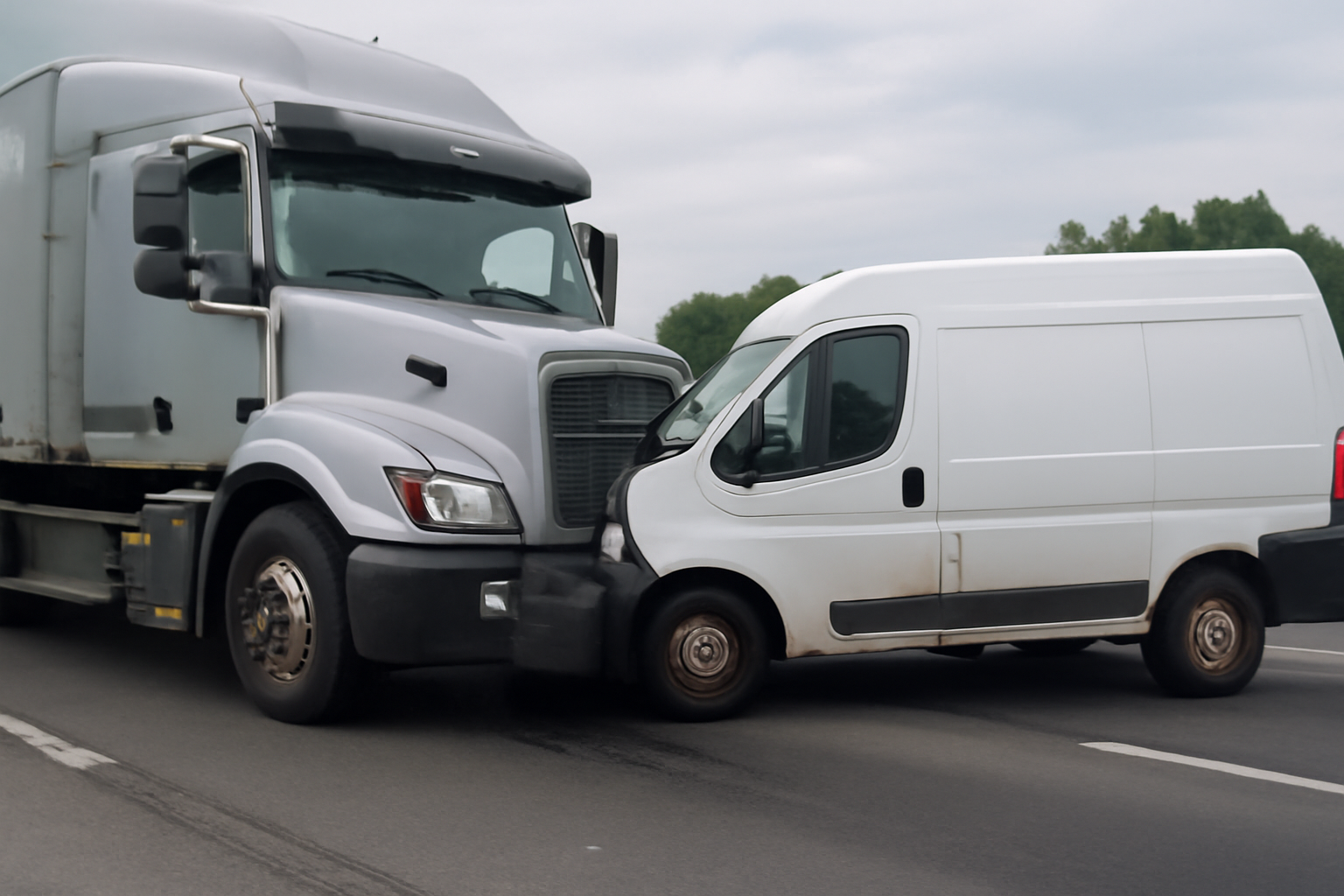
Truck accidents involving local delivery vans are not your typical traffic incidents. When the parties involved represent multiple companies, determining who holds responsibility can become complicated. In many cases, the issue is not straightforward and often involves an investigation into several factors, including the actions of the drivers, the condition of the vehicles, and the business relationships between the involved parties.
In a truck crash between a large commercial vehicle and a local delivery van, responsibility can fall on the driver of the truck, the delivery van driver, the companies they represent, and sometimes even third parties. It’s crucial to understand that liability is not just based on the accident itself but also on the context of the work environment, the legalities surrounding the drivers’ employment, and other complicating factors.
Factors That Influence Liability
Understanding liability in these situations requires a thorough investigation into several key elements. Each of these factors plays a role in determining who should be held accountable.
1. Fault of the Drivers
The first and most significant element in determining liability is establishing who was at fault in the accident. In most cases, the driver who caused the collision—either through reckless driving, failure to follow traffic laws, or other negligent behaviors—will bear the brunt of responsibility. However, in accidents involving multiple parties, both drivers could share some fault.
- The Truck Driver’s Role: If the truck driver was speeding, driving under the influence, or ignoring traffic signs, the trucking company may be held liable. The responsibility falls on the driver but can extend to the company if their actions are deemed to be in the scope of their employment.
- The Delivery Van Driver’s Responsibility: Similarly, if the local delivery van driver failed to yield the right of way, ran a red light, or was otherwise negligent, they could be deemed responsible for causing the accident.
2. Employer Liability: Who’s Responsible for Their Employee’s Actions?
Liability does not always fall solely on the drivers involved in the accident. In many cases, the companies that employ the drivers may also be held liable, especially if their employees were acting within the scope of their employment at the time of the crash. This principle is known as vicarious liability, where an employer is held responsible for the actions of their employees during their work duties.
- Trucking Company’s Role: In truck accident cases, the employer’s responsibility comes into play when the truck driver was operating the vehicle as part of their job. This includes driving for a scheduled delivery, hauling goods, or engaging in any actions related to company business. If the trucking company was aware of the driver’s history of unsafe driving practices, they could be held accountable for negligence.
- Local Delivery Company: The same principles apply to the company that employed the delivery van driver. If the driver was performing their duties at the time of the crash, their employer may share responsibility, especially if they failed to provide proper training, regular vehicle maintenance, or adequate safety protocols.
Third-Party Liability: Who Else Could Be Responsible?
In some cases, liability may not just be limited to the drivers and their employers. Third parties, such as the companies responsible for maintaining the vehicles or logistics companies managing the route, could also be found at fault.
Steps of a Personal Injury Case Will My Case Go To Trial?Related Videos
1. Vehicle Maintenance and Repair Companies
Many truck crashes result from mechanical failures. If an issue such as faulty brakes, worn-out tires, or engine problems caused the accident, the company responsible for maintaining or repairing the vehicles involved could be held liable.
- Responsibility for Vehicle Maintenance: If the trucking company or delivery van company outsourced vehicle maintenance to a third-party service provider, and that provider failed to conduct proper inspections or repairs, they may be held responsible for the crash. For instance, if a truck crashes due to a brake failure that was preventable with regular maintenance, the repair company may be partially liable.
2. Logistics and Route Management Companies
In some cases, delivery or transportation companies hire logistics firms to manage their routes. If the logistics company failed to properly plan the route, leading to an unsafe driving environment (e.g., scheduling the truck to drive through hazardous conditions or tight spaces), they could share liability for the crash. For instance, if the delivery van driver was forced to navigate a congested, high-traffic area due to poor planning, and an accident occurred, the logistics company may also be found liable for contributing to the crash.
The Role of Insurance in Determining Liability
In the aftermath of a truck accident, the insurance companies involved will typically play a significant role in determining who is liable and how damages will be compensated.
- Commercial Vehicle Insurance: Both the truck and the delivery van should have commercial vehicle insurance, which covers damages caused during the course of work. If the truck driver or the delivery van driver is at fault, their respective insurance providers will likely cover the damages. However, there may be disputes over the extent of liability and which policy should cover the damages.
- Employer Insurance Coverage: If an employer is found liable for the actions of their employees, the employer’s insurance policy may cover the damages as part of a commercial auto policy. However, in cases where the driver was acting outside the scope of employment (e.g., personal use of the vehicle), the employer’s insurance may not apply.
- Third-Party Insurance: If a third-party maintenance or logistics company is found to be responsible, their own insurance policies will come into play.
The Legal Process After the Crash
Once liability has been established, the legal process begins. In the event of a truck accident involving multiple companies, the process can become more complicated. Steps to take after a truck crash may include:
1. Gathering Evidence
After an accident, collecting evidence is crucial to build a strong case. This includes:
- Witness statements
- Police reports
- Dashcam footage or traffic camera footage
- Photos of the accident scene
- Vehicle maintenance records
- Driver employment records
This evidence will help establish the cause of the crash and which parties were responsible.
2. Consulting an Attorney
In cases where multiple companies are involved, it is essential to consult with an experienced personal injury attorney, especially one familiar with trucking accidents. An attorney can guide you through the legal process, ensuring that all parties at fault are held accountable. They will also help negotiate with insurance companies and, if necessary, file a lawsuit to recover damages.
3. Negotiating or Litigating the Case
The next step is either negotiating with the insurance companies involved or proceeding to court. Insurance companies will likely try to settle the claim quickly, but in some cases, negotiations may break down, and litigation becomes necessary.
Seeking Justice After a Truck Crash
Truck accidents involving local delivery vans and multiple companies can result in severe injuries or even fatalities. Determining who is liable involves analyzing many factors, and victims of these crashes deserve to be fully compensated for their losses. By working with an experienced attorney, you can navigate the complexities of these cases and pursue justice for the injuries sustained.
Determining liability in a truck crash involving a local delivery van and multiple companies requires a thorough examination of all the facts, from the actions of the drivers to the responsibilities of the companies involved. If you’ve been involved in such an accident, it’s essential to consult Brad Morris Law Firm, we can guide you through the process, ensure that all parties responsible are held accountable, and help you recover the compensation you deserve.