
Summary
Yes. Store surveillance footage can help explain how an injury occurred in a North Mississippi retail store. Recordings may show when a spill appeared, whether employees inspected the area, whether warnings were present, and how the accident happened. Under Mississippi premises liability law, these details may help establish whether the store created a hazard or knew, or reasonably should have known, about it. Because security systems may overwrite recordings, request preservation as soon as reasonably possible. If you were hurt while shopping in Oxford, Tupelo, or nearby Mississippi communities, footage can be valuable alongside medical records, photographs, and witness accounts.
Why Surveillance Footage Matters After a Store Injury
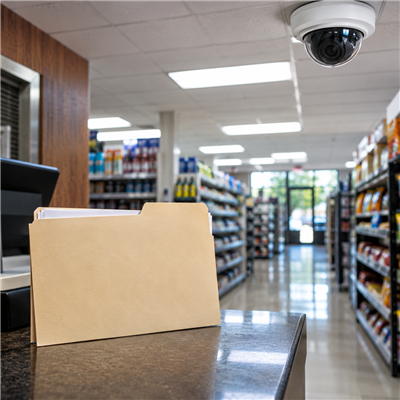
A fall in a grocery store, pharmacy, or retail aisle can happen quickly. You may remember your pain and the location, yet have little information about what caused the hazard or how long it existed.
Store surveillance footage can provide a visual record of events before, during, and after an accident. Depending on camera coverage, it may show a spilled liquid, merchandise obstructing an aisle, a missing warning sign, or activity near the accident site. Footage does not automatically establish negligence. It becomes useful when considered alongside the store's duties and the other available evidence.
What Can Store Surveillance Cameras Reveal About an Accident?
Retail store accident footage may help answer several practical questions:
- How the hazard appeared: A customer, employee, leaking container, or weather-related condition may have contributed to a dangerous area.
- How long the hazard remained: Video timestamps may help investigators examine whether the condition existed long enough to be discovered.
- What employees did: Recordings may capture inspections, cleaning efforts, reports of a spill, or movement through the affected aisle.
- Whether warnings were visible: Footage may show caution signs, cones, or other efforts to alert customers.
- How the fall occurred: Camera angles may show a customer's approach, movements, and the immediate aftermath.
For example, imagine that a shopper spills a drink in an Oxford grocery aisle. Several people walk past the spill before another shopper falls. A recording of this sequence might help establish the timing and surrounding circumstances. Its legal significance would depend on the complete evidence, including what the store reasonably could have known or done.
Related Videos
Steps of a Personal Injury Case
Will My Case Go To Trial?
How Does Mississippi Premises Liability Law Apply?
Customers entering a store for shopping purposes are ordinarily classified as invitees. Mississippi law generally requires a business to exercise reasonable care to keep areas used by invitees reasonably safe and to warn of certain dangers that are not readily apparent.
Under the Mississippi Supreme Court's decision in Munford, Inc. v. Fleming, 597 So. 2d 1282 (Miss. 1992), an injured shopper pursuing a typical slip-and-fall claim generally must support at least one of three theories:
- Negligent creation: The business or its employees negligently created the dangerous condition.
- Actual notice: The business knew about the dangerous condition and failed to take reasonable action.
- Constructive notice: The dangerous condition existed long enough that the business reasonably should have discovered it.
When a dangerous condition was created through the store's own negligence, the injured person generally does not also have to prove that the store separately knew about the condition. By contrast, when a third party caused a spill, evidence of actual or constructive notice may be central to the claim.
A store is not automatically responsible for every accident on its premises. The evidence must connect the dangerous condition and the store's conduct to the injury.
Learn more about the firm's Mississippi premises liability representation: Mississippi premises liability attorneys
Can Surveillance Footage Establish Store Notice?
Notice concerns the store's awareness of a dangerous condition. Actual notice means employees knew about a hazard. Constructive notice means that, based on its duration and circumstances, the business reasonably should have discovered the hazard.
Consider a Tupelo shopper who slips on detergent. If video shows another customer dropping the detergent only seconds before the fall, the store may argue that it lacked a reasonable opportunity to respond. If footage shows the spill remaining on the floor for a substantial period, the timing could support a different assessment.
Mississippi law does not establish one universal number of minutes that proves constructive notice in every case. The condition's duration, the available proof, and the surrounding circumstances matter. An employee merely walking nearby does not necessarily establish knowledge of an unseen hazard.
What If the Surveillance Camera Does Not Show the Fall?
A recording can still help even when the fall itself is outside the camera's view. Cameras near an entrance, adjacent aisle, or checkout counter may reveal conditions or activity relevant to the accident.
Video should be assessed with other premises liability evidence, including:
- Photographs of the spill, walkway, merchandise, or warning signs
- Witness contact information and employee statements
- Incident reports and available store inspection or cleaning records
- Medical evaluations, treatment notes, and bills
- Receipts, dates, times, and other information establishing your visit
A lawyer can compare these records to identify what the footage establishes and what remains uncertain. The firm's discussion of slip-and-fall insurance investigations addresses related evidence and insurer questions: Slip and fall insurance investigation
How Quickly Should You Ask a Store to Preserve Video?
Ask for preservation promptly after addressing urgent medical concerns. Some surveillance systems record over older files automatically, and retention schedules vary by business and equipment. There is no universal Mississippi rule requiring all private retail stores to keep every security recording for a set number of days.
A useful written preservation request identifies the date and approximate time of the accident, the location in the store, and the footage that may show the periods before and after the incident. Keep a copy of your request and any response.
An attorney may send a more detailed preservation letter asking the store to retain footage, incident reports, and relevant inspection records. A request to preserve video does not necessarily give you immediate access to a copy. Access may depend on voluntary cooperation or formal legal procedures.
Preserve the evidence early. A surveillance recording may be overwritten long before the deadline to file an injury lawsuit.
What Should You Do After an Injury in a North Mississippi Store?
Your first priority is appropriate medical care. Once immediate medical needs have been addressed, these steps may help document what occurred:
- Report the incident to a manager and request that an incident report be prepared.
- Record the date, approximate time, specific location, and names of relevant employees.
- Photograph the hazard, surrounding floor, displays, and warning signs when it is safe.
- Ask witnesses for contact information without pressuring them to make statements.
- Request preservation of surveillance footage for a useful period before and after the fall.
- Retain medical records, receipts, treatment instructions, and records of missed work.
- Describe only what you personally observed when speaking with an insurer; distinguish facts from assumptions.
The firm's guide to common slip-and-fall case mistakes provides further context: Common mistakes during a slip and fall case

Brad Morris
Attorney





Can Store Video Affect Fault and Compensation?
Yes. Surveillance video may help establish how the accident occurred and whether the shopper or another party contributed to it. Mississippi Code Section 11-7-15 uses comparative negligence. An injured person's own negligence does not necessarily eliminate recovery, but a fact-finder may reduce damages in proportion to that person's fault.
For example, a recording might show whether an obstruction was visible and whether the customer had a reasonable opportunity to avoid it. The same recording might reveal that the obstruction was positioned in a walkway without a meaningful warning.
Depending on the case, recoverable damages may involve medical expenses, lost earnings, future medical needs, and pain and suffering. Surveillance footage can inform the liability analysis, while medical documentation and financial records help establish the extent of an injury and its consequences.
For additional information about property-related injury liability, see: Slip and fall liability
How Long Do You Have to File a Mississippi Store Injury Lawsuit?
Mississippi Code Section 15-1-49 generally provides three years for negligence-based personal injury claims when no different limitation period applies. For many store injuries, that time is measured from the injury date. Exceptions and special circumstances can change the analysis, so the applicable deadline should be confirmed for the individual case.
The lawsuit deadline and the security camera retention period are different. A store may overwrite a recording long before the deadline to sue. Prompt investigation can help preserve records and obtain witness information while events remain fresh.
Frequently Asked Questions About Store Injury Surveillance Footage
Can I Request a Copy of a Store Security Recording?
Yes. You can ask store management for a copy and request that the recording be preserved. A private business may not be obligated to provide footage solely because of an informal request. A lawyer can explain potential legal avenues for obtaining relevant recordings.
What Happens If the Store Deletes the Video?
The consequences depend on the circumstances, including when the recording was lost, whether the store had a duty to preserve it, and the reason for its loss. Deletion alone does not automatically establish negligence or entitlement to sanctions.
Can Surveillance Footage Help If Nobody Saw My Fall?
Yes. Video of the surrounding area may help establish the timing and conditions even without a direct eyewitness. Photographs, medical records, and other evidence may also help explain what happened.
Does Every Mississippi Store Have to Keep Footage for the Same Amount of Time?
No. Retention practices differ, and there is no universal minimum retention period applicable to every private store recording. Requesting preservation as soon as reasonably possible can reduce the risk that potentially relevant footage is overwritten.
Speak With a North Mississippi Store Injury Attorney
If you suffered an injury while shopping in Oxford, Tupelo, or nearby North Mississippi communities, Brad Morris Law Firm, PLLC can review the circumstances, assess available evidence, and explain your potential legal options. The firm has offices in Oxford and Tupelo and emphasizes attentive, personalized representation for injury clients.
Call to discuss your store injury claim and whether surveillance footage or other evidence may assist your case:
Or contact the firm online: contact page
This article is for general informational purposes and is not legal advice. The outcome of any legal claim depends on its specific facts and applicable law.