
Summary
Yes. Wet fall leaves can affect fault in a Mississippi car accident because they can reduce traction, cover pavement markings, conceal standing water, and make braking or turning more difficult. Wet leaves do not automatically make one driver legally responsible. Fault depends on the facts, including each driver’s speed, following distance, braking, attention, lane position, and response to visible road conditions.
Mississippi follows a comparative negligence rule. That means more than one person can share responsibility for a crash. If you are found partly at fault, your recoverable damages may be reduced in proportion to the negligence attributed to you.
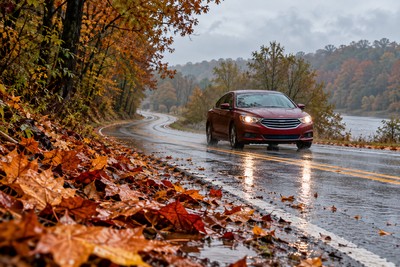
Brad Morris Law Firm, PLLC helps people injured in car accidents in Oxford, Tupelo, and nearby Mississippi communities understand how road conditions and driver conduct may affect a claim. When wet leaves are part of the crash scene, photographs, video, witness accounts, vehicle damage, tire condition, weather information, and the timing of the collision may all become useful evidence.

Brad Morris
Attorney





Why Wet Fall Leaves Can Make Mississippi Roads More Dangerous
A layer of wet leaves can create a slick surface between a vehicle’s tires and the pavement. Wet pavement already reduces friction, and leaf-covered roads can make traction less predictable when a driver brakes, turns, changes lanes, enters a curve, or travels downhill.
Leaves can also collect near curbs and drainage areas. They may cover lane markings, conceal pooled water, or make the edge of the roadway harder to identify.
In North Mississippi, including Oxford and Tupelo, leaves may collect along neighborhood streets, rural routes, campus-area roads, intersections, and shaded curves during the fall. When you encounter a visibly leaf-covered road, reducing speed and allowing more distance to stop can give you more time to respond.
Wet Leaves Do Not Automatically Excuse a Driver
Road conditions are only one part of a fault investigation. Drivers are expected to use reasonable care under the conditions that exist.
Evidence may support a fault argument when a driver:
• Travels too fast for the road and weather conditions
• Follows another vehicle too closely
• Brakes or accelerates abruptly on a slick surface
• Enters a curve without adjusting speed
• Becomes distracted and does not notice visible leaf buildup
• Drives with worn tires or a known vehicle problem that affects traction
• Loses control after failing to respond to a visible roadway hazard
The posted speed limit does not always decide whether a driver used reasonable care. A driver can travel below the posted limit and still be moving too fast for a particular road condition.
The road condition matters, but the conduct of each driver can be just as important when fault is evaluated.
How Mississippi Comparative Negligence Can Affect a Wet-Leaf Crash
Mississippi Code Section 11-7-15 provides that a person’s contributory negligence does not automatically bar recovery. Instead, damages may be reduced in proportion to the negligence attributed to that person.
For example, suppose one driver approaches a leaf-covered curve too quickly and crosses the center line. The other driver sees the hazard but is also traveling too fast to stop within the available distance. Depending on the evidence, responsibility could be divided between the drivers.
There is no fixed formula based on leaves, rain, or speed alone. Fault percentages depend on the evidence and the circumstances surrounding the collision.
For more information about how an injury claim may progress, visit:
https://www.bradmorrislawfirm.com/personal-injury-claim-timeline/
What Evidence Can Show Whether Wet Leaves Affected Fault?
Wet leaves can move or dry quickly. Passing traffic can scatter them, sunlight can change the road surface, road crews can clear the area, and later weather can alter the scene. Early documentation can help preserve what the road looked like near the time of the crash.
Useful evidence may include:
• Wide photographs showing the roadway, curve, intersection, shoulder, and leaf buildup
• Close photographs showing wet leaves, standing water, tire marks, or debris
• Dashcam footage
• Nearby surveillance video
• Witness statements about speed, braking, lane position, or road conditions
• The police crash report
• Photographs of vehicle damage and final resting positions
• Tire, brake, and other vehicle-maintenance evidence
• Weather information from the time of the collision
• Medical records connecting your injuries to the crash
If you can safely take photographs, capture the scene from several angles before conditions change. Do not enter active traffic or place yourself at risk to collect evidence.
For more information about Mississippi car accident claims, visit:
https://www.bradmorrislawfirm.com/mississippi-car-accident-lawyers/
Related Videos
Steps of a Personal Injury Case
Will My Case Go To Trial?
Could a Property Owner or Government Entity Be Responsible for Leaves on the Road?
Possibly, but responsibility for a roadway condition depends heavily on the facts.
A claim involving a city, county, business, property owner, or another entity may require evidence about who had legal responsibility for the location, whether that party knew or should have known about the condition, how long the condition existed, and whether there was a reasonable opportunity to address it.
Naturally fallen leaves do not automatically create liability for a government entity or nearby property owner. Relevant facts may include:
• The location and extent of the leaf buildup
• Whether drainage problems contributed to standing water
• How long the condition existed
• Whether prior complaints or reports were made
• Who controlled or maintained the affected area
• Whether any person or entity created or worsened the hazard
Claims involving a Mississippi governmental entity can be subject to special notice requirements, procedures, defenses, and deadlines. Those rules can differ from the rules that apply to an ordinary claim between private parties.
What Should You Do After a Crash on Wet Leaves?
Your health and safety should come first. Seek appropriate medical care when you are injured. Some injuries may not be fully apparent immediately after a collision.
You can also take steps to preserve information about the crash:
• Call law enforcement and report the collision
• Photograph the roadway and leaf-covered areas when you can do so safely
• Exchange insurance and contact information with the other driver
• Get names and contact information from witnesses
• Preserve dashcam footage before it is overwritten
• Keep medical records, bills, repair estimates, and insurance correspondence
• Give accurate information without guessing about facts you do not know
• Avoid detailed social media discussions about the collision
An insurance company may contact you soon after the crash. Questions about your speed, braking, attention, or the condition of the road can later become part of a dispute about fault.
Before signing a settlement release, make sure you understand what claims and damages the release covers.
For more information about an insurer’s first settlement offer, visit:
https://www.bradmorrislawfirm.com/should-i-accept-the-insurance-companys-first-settlement-offer/
How Long Do You Have to Bring a Mississippi Car Accident Claim?
Mississippi Code Section 15-1-49 generally provides a three-year limitations period for actions when another limitations period is not specifically prescribed. The deadline for a particular car accident claim can depend on the facts, the parties involved, when the claim accrued, and whether another law applies.
Claims involving governmental entities may be subject to different notice requirements and shorter deadlines.
A filing deadline should not be treated as a reason to delay an investigation. Wet leaves can disappear quickly. Video can be overwritten, vehicles can be repaired, and witnesses can become harder to locate. Preserving evidence early can make it easier to show what the road looked like and what each driver did before the collision.
Why Fault in a Wet-Leaf Accident Requires a Look at the Whole Crash
A slippery road may contribute to a collision, but the roadway condition does not answer every question about fault.
A complete investigation may examine:
• How fast each vehicle was traveling
• Whether either driver was following too closely
• Whether the leaf buildup was visible
• When each driver began braking
• Whether either driver crossed a lane or center line
• Whether distraction affected either driver
• Whether tire, brake, or other mechanical conditions affected vehicle control
• Where the vehicles made contact
• Where the vehicles stopped after the collision
• What witnesses, photographs, video, and physical evidence show
The goal is to determine how the road conditions and the actions of the people involved combined to cause the crash.
Talk With a Mississippi Car Accident Lawyer
If you were injured in a crash on a leaf-covered road, you may have questions about whether another driver, the roadway condition, your own actions, or several factors contributed to the collision.
Brad Morris Law Firm, PLLC serves injured people from offices in Oxford and Tupelo, Mississippi. The firm can review the circumstances of the crash, explain how Mississippi fault rules may apply, communicate with insurers, and help you understand your legal options.
Learn more about Attorney Brad Morris:
https://www.bradmorrislawfirm.com/attorney-brad-morris/
Contact the firm:
https://www.bradmorrislawfirm.com/contact/
Call: (662) 468-1080
This article is for general informational purposes only and is not legal advice. Every case is different. Consult an attorney about your specific circumstances.